
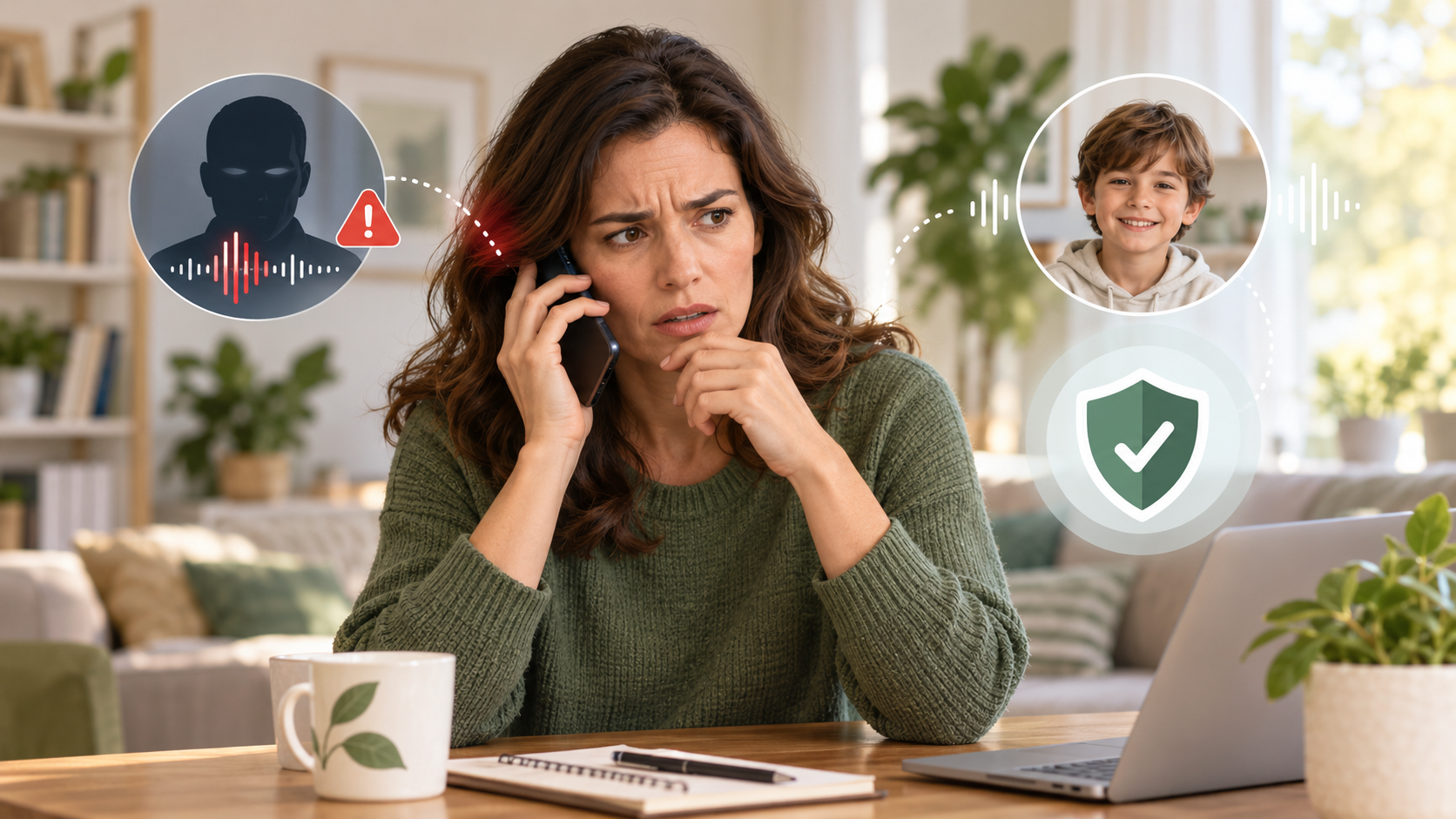
Older adults are not the only people targeted by scams, but they may face particular challenges when fraudsters combine urgency, authority, technology and emotion.
The goal should not be to frighten parents or take away their independence.
A better approach is to create simple family habits that make suspicious situations easier to verify.
1. Agree on one rule for unexpected money requests
Create a family rule that any unexpected request for money must be verified before payment.
This can apply whether the request appears to come from a bank, relative, government agency, delivery company or other organisation.
A simple rule is easier to remember than a long list of scam types.
2. Create a family call-back routine
Tell your parents that they never need to continue an unexpected call simply because the caller sounds official.
They can end the call and contact the organisation using a number they already trust.
For banks, this may be the number printed on the card or listed in the official mobile app.
For family emergencies, they can call the relative directly.
3. Make important contact numbers easy to find
Do not rely on someone searching the internet during a stressful situation.
Keep a short list of useful numbers in an easy-to-access place.
This may include:
• Bank support numbers
• Close family members
• Mobile provider
• Trusted neighbour or caregiver
• Local emergency contacts
The purpose is to make verification faster than responding to the suspicious caller.
4. Explain that caller ID can be misleading
A familiar name or local-looking phone number does not prove who is calling.
Scammers may use techniques that make a call appear more trustworthy than it is.
Encourage your parents to treat caller ID as information, not proof of identity.
5. Discuss OTPs and passwords clearly
Avoid complicated explanations.
A simple rule is more useful:
Never tell another person your banking password, card PIN, UPI PIN or OTP.
This rule should apply even if the caller claims to be from the bank.
6. Review common scam stories together
Talk about realistic scenarios occasionally.
Examples include:
A grandchild supposedly needing emergency money.
A bank account supposedly being blocked.
A fake courier or parcel fee.
A caller claiming a computer or phone has been hacked.
A fake investment opportunity.
The aim is not to memorise every scam.
It is to make the patterns familiar.
7. Avoid making parents feel embarrassed
People are less likely to ask for help if they fear being criticised.
Scams are deliberately designed to manipulate trust and emotion.
Create a family environment where saying “I received a strange call” is normal.
That early conversation may prevent a loss.
8. Set up a family verification phrase
A private family phrase can help with unusual situations, especially when a caller claims to be a relative.
It should not be something obvious from social media.
Everyone who needs to know it should understand when and how to use it.
9. Review devices together periodically
With permission, help check:
• Screen lock settings
• Software updates
• Suspicious apps
• Browser notifications
• Saved payment methods
• Email recovery information
Keep the process simple and explain any changes being made.
Final Thought
The strongest protection for aging parents is often not another security app.
It is a family system that makes it easy to pause, verify and ask for help.
Clear routines can provide protection while still respecting independence.
Recommended Reading
Is That Really You?
The Family Protection Plan for AI Voice Clones, Fake Bank Calls, Imposter Scams & Online Fraud.
The book includes practical family verification routines, emergency response guidance and tools designed to help families discuss scam safety before a crisis happens.