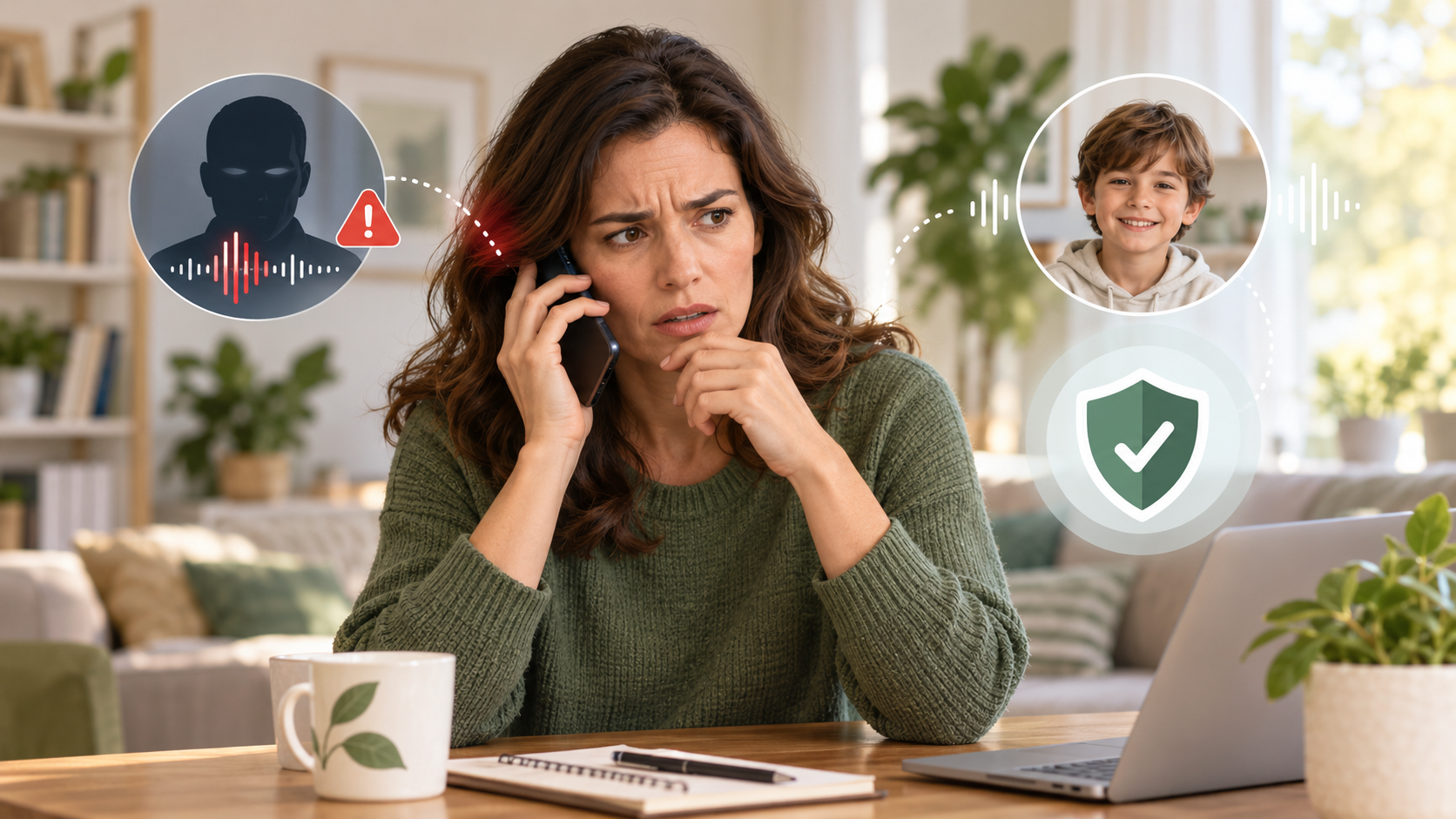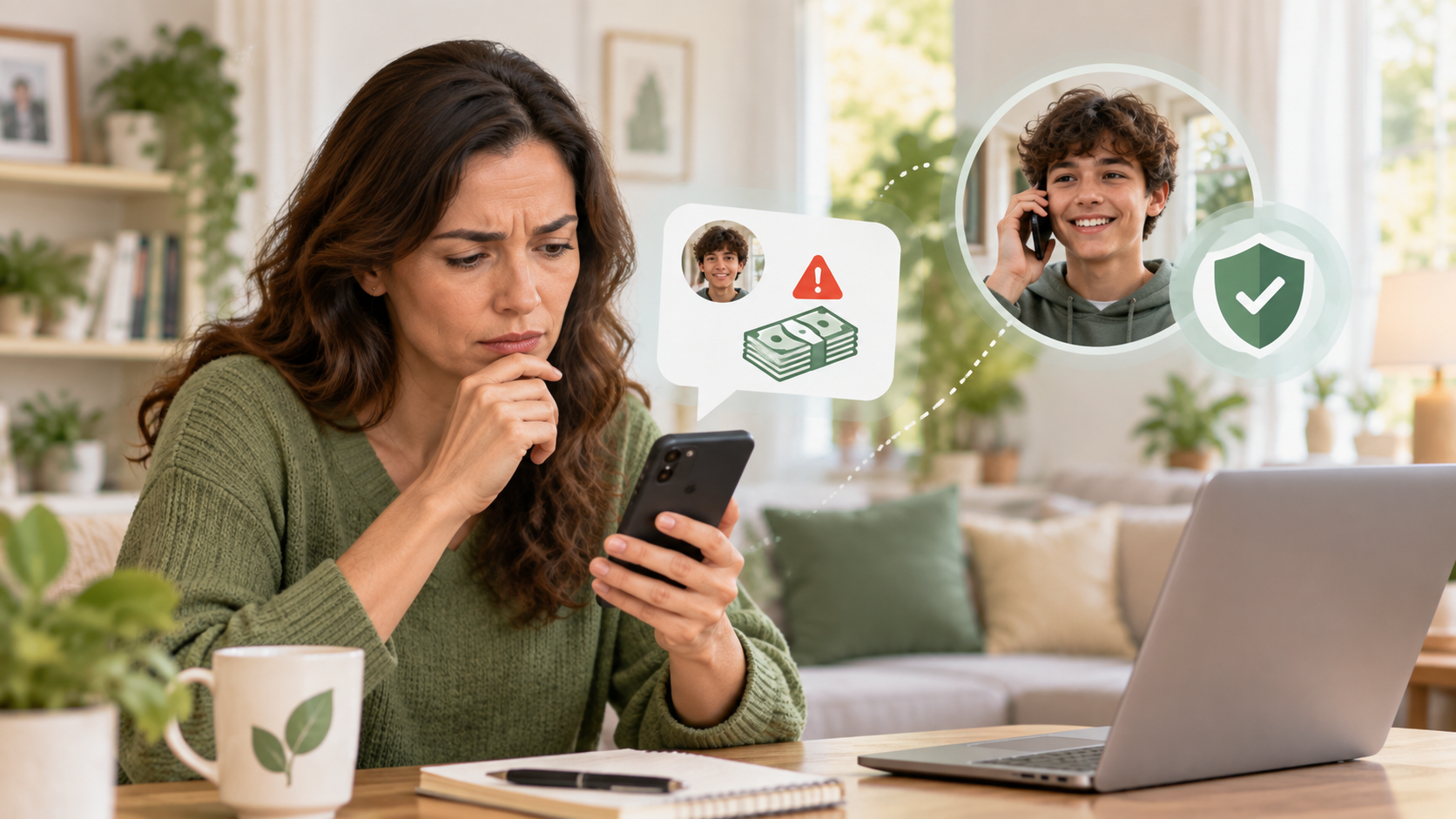

Online scams are no longer limited to obvious spam emails. Fraudsters can imitate familiar voices, create convincing messages, pretend to represent banks or government agencies, and pressure people into acting before they have time to think.
The strongest protection is not complicated technology. It is a family habit of slowing down, verifying unexpected requests and knowing what to do when something feels unusual.
1. Pause before acting
Scammers often create urgency. They may claim that an account will be blocked, a relative is in danger, a payment must be made immediately, or an opportunity will disappear.
Before sending money, sharing a code or clicking a link, stop and give yourself time to verify the situation.
2. Verify through a separate channel
Do not rely only on the phone number, email address or message that contacted you.
If someone claims to be from your bank, use the official number shown on the bank’s website or your card. If a family member asks for urgent money, call them using a number you already know.
3. Never share passwords, OTPs or banking credentials
Legitimate organisations should not need your password, UPI PIN, card PIN or one-time password in order to help you.
Treat any request for these details as a serious warning sign.
4. Create a family verification habit
Families can agree on a simple method for checking unusual requests.
For example, an unexpected request for money can always require a direct call back, a second family member’s confirmation or a private family phrase.
The important part is consistency. Everyone should know the rule before an emergency happens.
5. Talk about scams before they happen
Scam awareness works better when families discuss it regularly instead of waiting until someone has already been targeted.
Share suspicious messages, talk about new scam techniques and make it normal to ask another family member for a second opinion.
Final thought
Modern scams can be convincing because they are designed to trigger emotion, urgency and trust. A few simple habits—pause, verify, protect sensitive information and communicate with family—can significantly reduce the chance of making a rushed decision.
LeaforaBooks publishes practical digital books designed to help readers understand real-world challenges and take clearer, more informed next steps.